
Blog
How to give reading practice for grade 1

Engaging Activities to Boost Grade 1 Reading
Your child’s first book looks simple, but decoding it is like climbing Everest. Since practice reading for grade 1 often sparks frustration over “sounding it out,” literacy experts recommend the “5-Second Rule.” Just like watching them build a tough LEGO set, simply wait five seconds before helping. This pause transforms reading practice, prioritizing confidence over perfect accuracy while supporting struggling readers at home.
Mastering the ‘Slide’: How to Help Your Child Blend Sounds Into Words
If bedtime reading has become a power struggle over “sounding it out,” you aren’t alone. Knowing ‘A’ says /ah/ is great, but next comes phonemic awareness—the ability to play with those sounds. Breaking words apart (segmenting) builds spellers, but smoothly melting those sounds together (blending) builds confident readers.
Instead of choppy guessing, model how to blend sounds into words using a playground slide analogy.
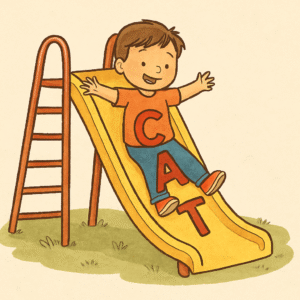
Try this simple routine:
- Stretch the first sound (Caaaa).
- Connect the vowel without pausing (…aaaa…).
- Land on the final letter (…t!).
To reinforce phonemic awareness, choose decodable books over leveled readers, which only feature patterns they already know. Once they conquer these predictable short vowel sounds, they will be ready to tackle words that break the rules.
Decoding ‘Heart Words’: Strategies for Teaching Words That Break the Rules
Imagine your child smoothly blending sounds, only to hit the word said. Suddenly, the rules vanish. These rule-breakers are high-frequency words making up 75% of children’s books. Instead of rote memorization using standard sight word lists, we need smarter strategies. Experts call these “Heart Words” because specific parts must be learned by heart.
To avoid exhausting flashcards, use orthographic mapping—connecting spoken sounds to written letters in the brain. Sound out the normal letters, then draw a little heart over the tricky part. Pairing this with multisensory reading techniques, like tracing those tricky letters in sand, builds lasting memory without the tears.
Spot the “heart” in these common words:
- Said: The “s” and “d” play by the rules; but “ai” makes a short “e” sound.
- Was: The “w” is standard; but “as” sounds like “uz”.
With rule-breakers conquered, you can focus on building reading stamina.
Building Reading Stamina with the ‘5-Second Rule’
You no longer need to view practice as a nightly battle. By embracing repeated reading to improve fluency, you’ll watch your child’s confidence soar. Reading the same book three times isn’t cheating—it builds the brain’s speed and expression! Aim gently for 40-60 words per minute without ever pulling out a stressful stopwatch.
Checklist for a successful 10-minute daily practice session:
- Start with a familiar, easy warm-up book.
- Wait five seconds before helping with tough words.
- Always end with a celebratory high-five.
Use a printable reading log to track these small efforts, not just finished books. Pair this routine with simple comprehension strategies, like discussing favorite characters, and reading becomes a joyful connection.