
Blog
Motivating Your 4-Year-Old to Write: Easy Tips

Know why 4 year old not interested in writing
If your 4 year old not interested in writing is becoming a daily worry, take a breath. At this age, writing is less about neat letters and more about building the body, confidence, curiosity, and meaning behind marks on a page. This guide explains why resistance happens and how to support writing for preschoolers without turning it into a battle.
Why is my 4-year-old not interested in writing?
A 4-year-old may avoid writing because the task is genuinely hard. Holding a pencil, sitting still, remembering letter shapes, and controlling small hand movements all require fine motor strength, shoulder stability, coordination, and attention. Some children show interest early, while others may not feel ready until later, and that can still be normal.
If you are thinking, “my child hates writing,” it may mean your child dislikes the pressure, fatigue, or correction more than writing itself. Forced tracing pages can quickly make writing feel like a test. The goal is to protect your child’s confidence while gently building readiness.
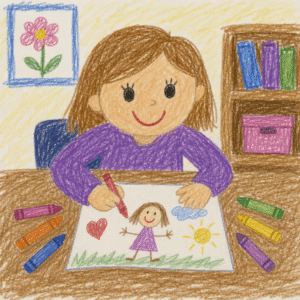
Early writing starts before letters
Before children write words, they need to move, squeeze, pinch, climb, draw, build, and explore. Big body movements help develop the shoulder and core control needed for smaller pencil movements later. That is why play is not a distraction from writing; it is part of the foundation.
Look for readiness signs rather than comparing your child with classmates or siblings. A child who enjoys scribbling, copying simple lines, drawing circles, pretending to write a list, or making marks during play is already moving toward writing. A healthy 4 year old writing interest may look messy, playful, and inconsistent.
Helpful readiness activities include:
- Rolling, pinching, and cutting playdough with child-safe tools
- Drawing roads, rainbows, faces, or favorite animals with thick crayons
- Building with blocks, beads, puzzles, and interlocking toys
- Using tongs, stickers, spray bottles, or clothespins to strengthen fingers
- Painting on vertical surfaces, such as an easel, to build shoulder control
- Playing outside through climbing, crawling, throwing, and balancing
How can I encourage writing without pressure?
The best way to learn how to motivate a child to write is to make writing useful, playful, and connected to your child’s world. Instead of saying, “Practice your letters,” invite your child to help write a grocery list, label a treasure map, make a birthday card, or sign their artwork.
If you want to know how to encourage kids to write, start by reducing the demand. Let your child dictate words while you write them, then invite them to add a mark, sticker, drawing, or one letter if they want. Celebrate effort, not neatness.
Try these low-pressure prompts:
- “Can you draw what we should buy at the store?”
- “Should we write your name on this picture?”
- “Can you make a secret note for Grandma?”
- “Let’s draw a menu for pretend restaurant.”
- “You make the marks, and I’ll tell the story.”
When to slow down and when to ask for help
Slow down if writing leads to tears, hand pain, strong avoidance, or daily conflict. Short, happy moments are better than long sessions that end in frustration. Five minutes of meaningful drawing can do more for confidence than a full worksheet completed under stress.
Consider asking a pediatrician, occupational therapist, or early childhood specialist for guidance if your child seems unusually weak in the hands, struggles with coordination, tires very quickly, avoids many fine motor tasks, or shows ongoing difficulty beyond writing. Support does not mean something is “wrong”; it simply helps you understand what your child needs.
A calmer takeaway for parents
Your child does not need perfect handwriting at four. They need playful practice, strong hands, patient adults, and reasons to care about marks on a page. When writing feels connected to stories, games, family life, and imagination, interest often grows naturally.
For families who want broader skill-building, explore Foxbrain courses for kids aged 4 to 15, including Abacus, Vedic Math, Robotics, AI and Coding, Personality Development, Brain Gym, Phonics, and Spoken English classes. The right learning environment can help children build confidence step by step, at a pace that feels encouraging rather than pressured.