
Blog
How to make learning fun for kids?

How to make learning fun for kids
Learning doesn’t have to be a chore for kids. It can be an exciting adventure filled with discovery and joy.
By making learning fun, we can ignite a child’s curiosity and foster a lifelong love for knowledge.
Parents and educators play a crucial role in transforming education into an engaging experience.
Incorporating fun educational games and activities can make a significant difference.
This guide will explore creative strategies to make learning enjoyable and effective for children.
Why Making Learning Fun Matters
Engaging children in enjoyable learning fosters a positive attitude towards education. When kids find joy in learning, they are more likely to retain information and stay motivated.
A fun learning environment enhances critical skills like creativity, problem-solving, and resilience. Kids who enjoy learning tend to explore topics with eagerness and curiosity. This approach promotes lifelong learning habits and adaptability.
Moreover, making learning fun develops a child’s social skills and emotional intelligence. Children often thrive when they participate in interactive learning. Creating a love for learning encourages both academic success and personal growth.
- Promotes retention of information
- Develops critical thinking skills
- Fosters social and emotional growth
Tips to Make Learning Enjoyable for Kids
Creating a fun learning environment starts with understanding your child’s interests. Tailoring activities to match their natural curiosity keeps them engaged and eager to learn.
Introduce a variety of learning styles to discover what resonates most with your child. Some kids may prefer visual aids, while others might enjoy hands-on experiments or storytelling.
Positive reinforcement is key. Encourage progress by celebrating small achievements. This helps build confidence and inspires continual effort in their educational journey.
Establishing routines that balance structured learning and playtime can also make learning more enjoyable. Consistent schedules can create a sense of stability and focus for children.
Additionally, incorporate different themes to spice up learning sessions. Transforming study time into a themed adventure can spark imagination and make learning sessions memorable.
- Match activities to interests
- Use varied learning styles
- Celebrate achievements
- Balance structure and play
- Incorporate fun themes
By following these tips, you can turn everyday lessons into exciting adventures.
Fun Educational Games for Every Subject
Educational games can transform mundane subjects into thrilling adventures. They are a fantastic way to teach complex concepts. For instance, math games often involve puzzles and challenges that make numbers exciting. They encourage problem-solving and critical thinking.
Science games can introduce kids to experiments and the wonders of the natural world. These activities stimulate curiosity and foster an interest in scientific exploration. They also provide a hands-on approach that promotes active learning.
Language games help in building vocabulary and language skills. Word searches, crossword puzzles, and storytelling apps are excellent tools for this. They turn language learning into an engaging experience.
For history and geography, role-playing games can bring past events and far-off places to life. Kids learn best when actively engaged in immersive stories.
- Math: puzzles and challenges
- Science: experiments and exploration
- Language: word games and storytelling
- History/Geography: role-playing and adventures
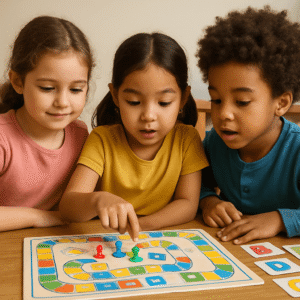
Educational games spark joy and keep kids motivated to learn. They’re an effective way to teach a wide range of subjects in a fun, engaging manner.
Creative and Hands-On Learning Activities
Creativity is a powerful tool in making learning enjoyable. Encouraging children to express themselves through art and crafts fosters a love for learning. These activities enhance their fine motor skills and enable them to visualize concepts.
Hands-on experiments are another excellent way to engage kids. They provide the chance to explore science in a tangible way. Simple experiments with household items can illuminate complex theories in physics and chemistry.
Storytelling can also be a fantastic learning tool. Children can create their own stories, using their imagination to explore various topics. This approach helps in developing strong language and communication skills.
Cooking and gardening are perfect for teaching practical math and science skills. These activities allow children to learn while having fun.
- Arts and crafts: creative expression
- Experiments: hands-on science
- Storytelling: language development
- Cooking/gardening: practical math and science

Incorporating creativity and hands-on activities into education can make the learning process dynamic and exciting. This method provides children with a deeper understanding of the subject matter.
Using Technology and Kids Learning Games
Integrating technology into learning opens up new possibilities. Devices like tablets and computers can host a wide range of kids learning games. These games make education interactive and fun for kids.
Educational apps come with features designed to captivate young minds. They cover various subjects, offering personalized content tailored to each child’s pace. This adaptability aids in maintaining engagement and interest.
Moreover, virtual reality tools provide immersive experiences. They allow children to explore new places and concepts without leaving home. This technological approach to learning stimulates curiosity and broadens horizons.
- Educational apps: personalized learning experiences
- Kids learning games: interactive and entertaining
- Virtual reality: immersive exploration
Using technology wisely can transform traditional education. It offers opportunities for interactive, engaging, and tailored learning experiences. With the right tools, technology makes learning not only possible but genuinely enjoyable.
Encouraging Curiosity and a Growth Mindset
Cultivating curiosity encourages children to explore and ask questions. This drive leads to deeper understanding and enjoyment in learning. Foster curiosity by presenting new and exciting topics regularly.
A growth mindset emphasizes effort and resilience over innate talent. Encourage children to see mistakes as learning opportunities. Praise their effort, not just their success.
Promote a nurturing environment where questions are valued. This enhances critical thinking skills and a love for discovery.
- Highlight new and intriguing topics
- Emphasize effort and learning from mistakes
- Celebrate questions and exploration
Encouraging curiosity and a growth mindset sets the stage for lifelong learning. These habits enrich children’s understanding and make education an exciting journey.
Making Learning Social and Collaborative
Learning doesn’t have to be a solitary activity. Engaging with peers enhances understanding and makes learning fun. Group activities foster teamwork and communication skills.
Encourage children to participate in study groups or collaborative projects. These experiences teach valuable social skills like listening and cooperating. Working together often leads to innovative ideas.
Games and role-playing activities also promote social learning. They offer opportunities to practice negotiation and problem-solving.
- Join study groups or collaborative projects
- Engage in games and role-playing activities
- Encourage teamwork and idea sharing
Social and collaborative learning helps children develop interpersonal skills. It transforms the educational process into an enjoyable, shared experience.
Conclusion: Building a Lifelong Love of Learning
Creating a positive learning environment is key to fostering a love for learning in kids. By incorporating fun and engaging activities, children remain curious and eager to learn new things.
Parents and educators play a crucial role in this journey. By mixing enjoyment with education, they can help unlock each child’s full potential. Encouragement and creativity pave the way for a lifelong passion for discovery and knowledge.